The national idea of the Uzbek people
- As a social scientist, I thought about the national idea of the Uzbek people for many years. Like many of my colleagues, I struggled to find a scientific and theoretical expression for it. History, great thinkers...
- As a social scientist, I thought about the national idea of the Uzbek people for many years. Like many of my colleagues, I struggled to find a scientific and theoretical expression for it.
I read and studied history, the works of great thinkers, had conversations and debates with many wise people, sometimes in absentia, sometimes face to face. In this regard, the world experience and practice did not escape my attention.
If I change the words of Haji Yusufbek a little, this hair, this beard flowed because of the sadness of the national idea. It can be said that as a result of the research, I came to some amazing conclusions and made some unexpected discoveries.
In Soviet times, there was no problem in this regard. Geniuses like Karl Marx, Friedrich Engels, Vladimir Lenin solved this problem for us.
The idea of communism was introduced as a firm, unchanging postulate as a political and national idea for the entire Soviet Union and the countries of the socialist camp. Communism.
Point. That's it.
We will not talk about the future of this idea. Today, many countries try not to flaunt their national ideals as much as possible in order to present themselves as free, democratic and free countries.
For example, in the United States, I realized that the idea of "American interest is above all else" was very skillfully absorbed into the concept of "American dream". in Turkey I noticed that Turkism, i.e., Pan-Turkism, Shiism in Iran, and Wahhabism in Saudi Arabia are sometimes overtly and sometimes covertly manifested in the guise of a national idea.
Or, if the idea of "chuchhe" - i.e., relying only on one's own strength and capabilities - is the priority in North Korea, while China openly promotes the idea of "Market Communism". The national idea of Belarus is the most wonderful of all, and this country has the principle that "belorusy doljny stat belorusami", that is, Belarusians should become Belarusians.
It is not surprising that the Belarusian language and culture should not be overshadowed by the Russian language and culture. The national idea was widely discussed in Uzbekistan by the country's dargahs, the flowers of our society, scientists and scholars, men and writers.
After many researches, discussions and reflections on this topic, researches, monographs and brochures, textbooks and manuals, educational programs were created and introduced into the educational system. But these did not satisfy me.
I constantly asked myself the question: what is our national idea? How can it be expressed in a content and form that will not raise objections in anyone and will be acceptable to everyone?
That is, " "Which idea can be accepted as a national idea, which reflects the aspirations and basic interests of the society, which unites, mobilizes, and regularly develops all citizens living in this country, regardless of age, gender, nationality, social status, level of education, worldview, and political beliefs? These questions did not give me peace and rest.
I spent many sleepless nights thinking about this. One of the waking nights, an unexpected, strange thought flashed in my mind, like a flash of lightning.
Finally, I found the national idea of the Uzbek people! No matter how unnatural, unscientific, and stupid this idea seems to some, it is the truth.
I am ready to debate with any scientist, any opponent. The most important thing is that the national idea of the Uzbek people can be expressed in a very short way, with only two words.
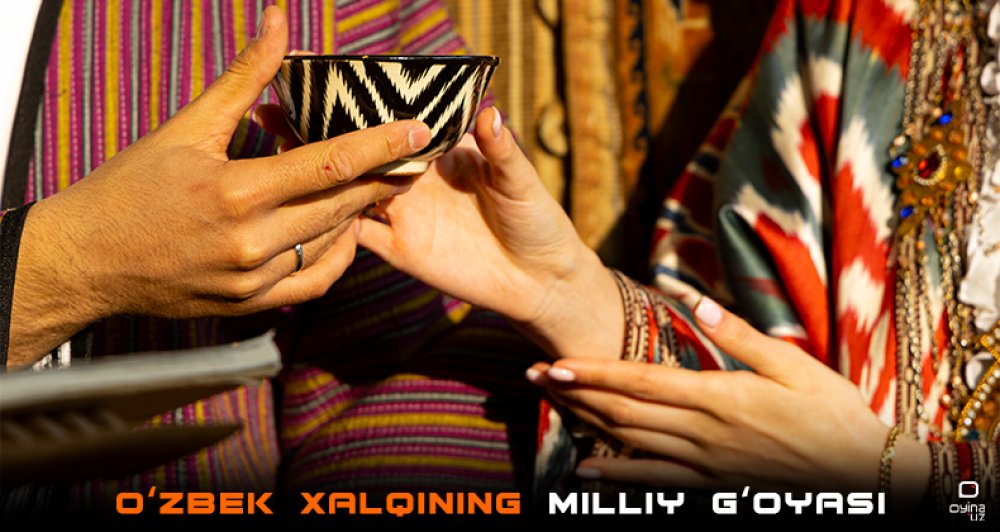
That is, our idea, which has passed the test of centuries and has become a solid concept, a firm belief, which does not burn in the grass, does not sink in water, does not rot in the soil, and has become the way of life and death of the Uzbek people, is embodied in the simple words "toy-hasham". "Wedding" in this place If the word "hasham" means not only the wedding ceremony, but also a series of concepts that are closely connected with our national customs, such as aza, maraka-rituals, the word "hasham" means to live with luxury, show, wealth or status (regardless of whether it is there) and to live with deep satisfaction.
It should be noted that wedding luxury is not just a tradition or custom, but a way of life and thinking. Traditions and customs can be changed, but the way of life and thinking cannot be changed.
The thousand-year history of the Uzbek people clearly proves this fact. Come on, now this "wedding luxury" let's analyze the concept from the point of view of the existing rules and criteria of the national idea.
So, the first requirement of our national idea is the principle that "reflects the aspirations and fundamental interests of society...". Say for yourself, what other idea can reflect the dreams and aspirations of the Uzbek nation in such a bright, complete and perfect way than a wedding?
Don't die, only wedding luxury. We say that proverbs are the mirror of the people's heart.
So, what do we see in this mirror? "Let us all get to the wedding"; "Don't let your head come out of the wedding"; "Let him order only for weddings"; "To the wedding with a camel"; "Thirty years do not touch the one who marries a son, forty years do not touch the one who gives birth to a daughter" and so on.
Among all the great scholars, Sharia leaders, poets and thinkers who passed through our country, there is not a single person who did not say "dod" at a wedding ceremony! There are two things that disgrace our nation: one is a wedding, and the other is Let's remember his complaints in the meaning of mourning.
So, what is the national idea? The national idea should be an invincible spiritual force embedded in the blood and bones of the nation.
For this idea, not only a group of enlightened people, but the whole nation must be ready to die. For us, the idea of "wedding luxury" is such a force.
It always emerges from the pillars of our religion, the teachings of our ancestors, and state policy. There is no power in the world that can defeat him.
Both the era of the khanates and the Soviet government, as well as our independent state, have always paid great attention to family events and ceremonies in a compact, low-cost and modest manner, taking into account the fact that this issue is not only spiritual, but also socio-economic. In this regard, even supreme decrees, decrees and decisions have been adopted.
Looking through the pages of history, I found another example that confirms my opinion. In 1911, the last emir of Bukhara, Sayyid Olimkhan, issued a decree "On ending extravagant weddings".
According to it, those who served food other than pilaf at weddings were punished with 75 (seventy five) lashes. The custom of giving cloaks to each other is also prohibited.
At the same time, it is forbidden to organize goats and races at circumcision and weddings. Those who organized such events were even sentenced to death.
But el-ulus did not stay with what he knew. Here, a scourge called the coronavirus has come to earth.
The government, considering the people's grief, made a decision to hold weddings with no more than thirty people. But...
but the people still did not turn back from the goal of "luxurious wedding". These weddings lasted for three days, people risked their lives and went to weddings.
How many died from it. Three or four years ago, I met one of my former students.
At that time, he worked in the Government, in a responsible position. For some reason, he looked silent and confused.
Even though I didn't ask, he told me his pain for some reason: he has three daughters and one son. He gave away his two daughters, and now a suitor is coming for the third one.
His son has finished the seventh grade. "Teacher," he said, almost crying, "this wedding has ruined me." You know my wife, she is also your student, we studied together at the university, she is a doctor of biology, a professor.
Now he is a vice-rector in an institute, a women's activist. He studied Russian both at school and at the university, and completed his post-graduate and doctoral studies in Moscow.
He speaks Uzbek with difficulty and "tvoya-moya". He goes to scientific conferences in London and Paris and gives lectures in English.
So, a very advanced, super modern lady. But such a woman is worse than an uneducated, extremely ignorant, rag-loving woman when it comes to this matter of marriage.
Dear wife, let's reduce these habits a little, if I say that I can't, my soul will leave. With a twinkle in his eye, he insists that he doesn't know anything and doesn't want to know.
If I say that I should take a bribe and go to prison because I will do what you say, well, how are others doing, you will fulfill your fatherly duty, that's all, says the bellman. Otherwise, if I talk to the gods myself, he will make me mad, saying, "Have you lost your mind, which god would agree to this?" He says, "Don't start the revolution with me, let all the women of Uzbekistan go this way first, and then I will agree." "I can't stand it when my daughters are scolded by their mother-in-law and their husband, and they shed tears." "Domla, you have a high reputation, the whole of Uzbekistan respects you, if you do this, you will be rewarded, if only this woman will come to justice." I certainly did not say no out of spite.
Although many wise and great people have written sharp and impressive books on this topic and failed to achieve the goal, the person's face is hot, I got rid of it by thinking about it. After all, what moral right do I have to write a book about this, if I myself have not gotten rid of the vices mentioned by the disciple?
I would like to give one, only one example in this regard, but I think this is enough. Listen to poor Abdulla Awlani's grief for a moment: "Who will do the education?
Where will it be done?" the question arises. To this question, "The first is home education.
This is a mother's duty. The second is school and madrasa education.
If we answer that it is the duty of the father, teacher, mudarris and the government", one person will say: "Which mothers do you mean? Uneducated, fluffy-headed, clumsy mothers?
Do they properly provide education that they don't have?" says This word breaks a person's heart and burns his heart. "What will you say to his father?" If we say, "Which father?
Are you talking about fathers who do not know the value of knowledge, who do not pay a single penny for knowledge, who are ignorant of the times? First of all, it is necessary to educate and educate themselves", he says.
After hearing this word, the hands of hope hit the armpits. When I returned, I did not see the official apprentice.
Now, I don't know where he is, I hope he is not locked up. Do you know how many weddings and luxuries an Uzbek, Muslim man should have in his lifetime?
Here's a list: maternity wedding, i.e. taking the baby out of the maternity ward, aqeeqah, cradle wedding, circumcision wedding, muchal wedding, marriage wedding, girl's party, bridal greeting, charlar, silver wedding, golden wedding, Prophet's age wedding, etc.
If you take the campaigns, three, seven, twenty, forty, "Thursday", "Sunday", two Eid ceremonies, the New Year... If we count everything, we will have to blacken the face of many more pages.
When approached with the criteria of the national idea, these are the only customs able to unite and mobilize all members of the Uzbek society "regardless of age, gender, social status, level of education and outlook, political beliefs". Our people are ready to sacrifice their health, their entire being, even their precious lives for the sake of this idea, that is, wedding luxury.
That's why they are called migrants and are ready to burn to ashes in the deserts of Kazakhstan, in broken buses, to work in the Siberian taigas, to sweep the streets of Moscow, to fight in the snow in the harsh winter, while women leave their families, husbands, and children to live in Turkey and Dubai. Most of them have one dream, one goal: to earn money in foreign countries by any means and spend it on weddings and celebrations.
If we analyze it based on the criteria of the national idea, do we have concepts and principles that "regularly develop and enrich"? There is, of course, only one idea.
If he is there, it's a luxury. Let's face it, there are new and different signs and symptoms appearing at our weddings: "love stories" at weddings - love stories, father-in-law and bride waltzing together, bride throwing bouquets to her friends and their quarreling over it, "bride's navkar", "groom's greetings" the introduction of such customs as the bride and groom entering the wedding hall riding a horse or Mercedes, combing the hair of fat sheep sent to the godfather, wearing colored ribbons on their horns, putting shoes on their feet and putting lipstick on their lips...
is this not evidence? Or has any nation in the world been able to create such "know-how" as "renting" fruits, pistachios, almonds, and confectionery products to decorate the false table at our weddings?
Such things can only be done by a nation that has raised the concept of wedding-luxury to the level of a national idea and devoted all its intelligence to it... Indeed, as His Holiness Alikhontora Soguni said, if our nation united with great mobilization in the way of weddings, feasts, and feasts, if it united with such unity and showed strength in the way of the goals demanded by our time and prescribed by our religion, there would not be a force on earth that could defeat this nation, there would be no goal that this nation did not achieve.
But, alas... Nachora, regardless of whether someone likes it or not, whether our nationalist intellectuals sneer at it or not, there are all the historical, philosophical, spiritual grounds to say that the national idea of the Uzbek people is the idea of luxury.
De jure may be different, but de facto is the same. When will we get rid of this situation - "this question still remains unanswered".
Ehtirom Abdullayev, philosopher, 71 years old from the book "Listening to people" by Khairiddin SULTON.