
Young people who are emotionally exhausted and addicted to the digital world - Burnout and its causes
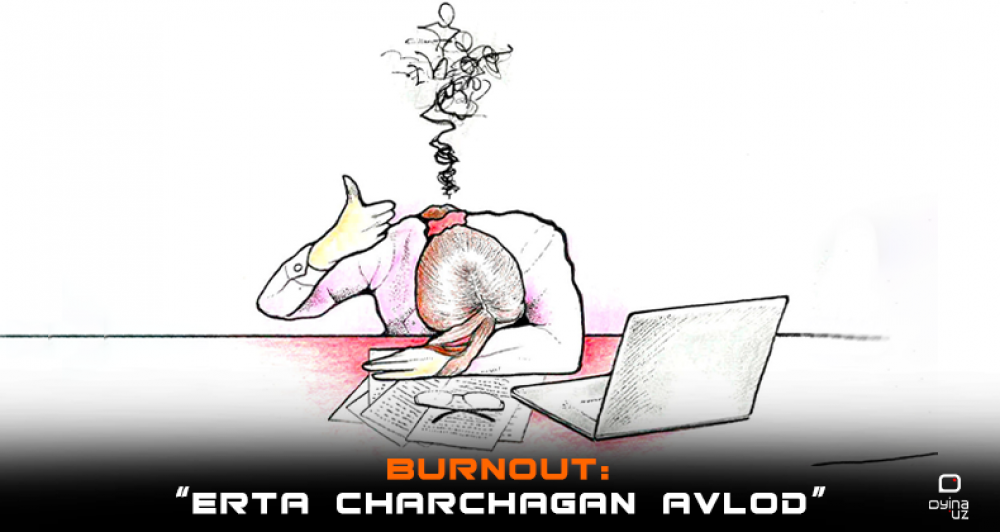
When we think of young people, we think of young men and women who are full of energy and enthusiasm, and their eyes are shining. But in real life it is different. Most of the young people have sadness, fatigue and apathy in their eyes. Seeing this...
When we think of young people, we think of young men and women who are full of energy and enthusiasm, and whose eyes are shining. But in real life it is different.
Most of the young people have sadness, fatigue and apathy in their eyes. Seeing this, questions arise as to why young people get tired so quickly and lose motivation early.
They experience burnout and emotional exhaustion at the same time when strength, opportunity, and desire are pulsating. Although this syndrome has been widely studied mainly in professional fields, in recent years it has been found that it is also spreading widely among young people.
There are many factors that cause this situation and they are closely related to each other. What does this mean?
The concept of burnout was first proposed by the American psychologist Herbert Freudenberger in the 1970s. Freudenberger used the term to describe intense fatigue and depression in work.
Burnout syndrome is mainly caused by long-term work under high pressure, stressful situations and excessive demands. This condition leads to a decrease in mental, physical and emotional strength, and also changes a person's attitude towards work and the people around him in a negative way.
Everyone is great, but I'm unlucky Unique stages of young people's life - such factors as the process of learning, uncertainties in choosing a professional direction, social relations, and personal development increase the risk of burnout syndrome. Young people constantly try to express themselves, be active in social networks and adapt to the rapid changes of the modern world.
The psychological stress that occurs during this process often has a negative impact on their mental health. The biggest cause of burnout is the digital life.
Instagram, or on the feed "success stories" of others flow continuously: someone is the owner of a big business at the age of 20, someone went abroad, someone graduated and got a good job, and someone bought a new house or car. In this sense, the factors that cause burnout are reminiscent of FOMO syndrome.
Social media often takes us away from the moment to see a carefully edited version of someone's life. And it's like we fall into a dark void - from there the world seems like a playground for others, a paradise on earth, but for you it becomes a battlefield.
What about the result? Constant comparison.
Internal rush. Dissatisfaction with oneself.
The brain gets tired of such a flow of information, and at the same time it loses its mood. As a result, young people do not rest even when necessary, their brains continue to work under extremely stressful thoughts such as "I am lagging behind others", "I should be like them".
Or many families have the same vision for their child's future: "You will study well, you will enter a prestigious school, you will find a good job, you will become a respectable person." But life does not go in one line. Some young people don't want to study, but want to learn a profession, and someone needs a job that they like, that gives them peace of mind, not a good job.
However, most parents do not understand this, and the child lives under constant pressure. They are often forced to live not for their own lives, but for the "result" that their parents show to society.
This increases self-criticism in young people and makes them lose their inner freedom. A sharp disparity between desire and commitment accelerates fatigue.
In addition, today's student not only studies, but also has to work. One is to help his family or meet his own needs, and the other is for further education and development.
In this way, young people who have not yet turned twenty are running in a study-work marathon. As a result, there is not enough time to rest, and the brain is always in a state of "getting ready for work".
In addition, the lack of a healthy lifestyle, insufficient sleep, and lack of physical activity also lead to mental fatigue. Consequences of emotional exhaustion Many studies conducted in recent years show that the syndrome of emotional exhaustion is widespread among young people.
This is explained by the fact that, on the one hand, young people are not yet fully formed mentally, and on the other hand, their life is a period of sudden changes, decisions and demands. For example, the level of burnout among students studying in higher education institutions is estimated to be around 30-50%.
This has a negative impact on their academic success, health and social relationships. The most common symptoms of burnout include: - Constant fatigue and feeling of laziness; – Decreased interest in studying; - Loss of motivation; - Feeling isolated, depressed; - Withdrawal from social relations.
If these conditions are not paid attention to in time, it can lead to depression, mental disorders and even physical diseases. Ways of prevention Preventive measures, as well as psychological and social approaches, play an important role in the prevention of emotional exhaustion syndrome.
- Psychohygiene and self-awareness.
Young people should learn how to understand, control and reduce stress. Developing emotional literacy reduces the risk of burnout.
- Time management and planning.
It is important to manage time effectively, reduce overloads, and pay attention to rest time. 3.
Social support. Positive attitudes, understanding, and encouragement from family, friends, and teachers provide mental stability.
- Physical activity and healthy living.
Exercise, meditation, adequate sleep, and proper nutrition can help restore mental strength. 5.
Psychological counseling and correction. Identifying the signs of burnout at an early stage and seeking the help of a professional psychologist play an important role in preventing negative consequences.
Shahruza SATTOROVA